The Power of Play: Learning Through Exploration and Discovery
Play is often seen as just a form of leisure or entertainment for children, but did you know that it is actually a powerful tool for learning? Children learn best when they are engaged and having fun, and play is the perfect way to provide that. Through play, children are able to explore and discover the world around them, develop critical skills and abilities, and make connections that enhance their overall learning experience. In this article, we will delve into the power of play and how it can shape a child’s learning through exploration and discovery.
The Role of Play in Learning
From birth, children are naturally curious and have an innate desire to explore their surroundings. This is where play comes in. Play is a child’s way of using their imagination, creativity, and physical activity to learn and make sense of the world. Through play, children are able to develop essential skills such as problem-solving, critical thinking, communication, and self-regulation. These skills are crucial not only for academic success but also for overall personal and social development.
Types of Play
There are various types of play, each with its own unique benefits for a child’s learning. These include:
1. Physical Play
Physical play involves any activity that gets the body moving, such as running, jumping, climbing, and playing sports. This type of play helps children develop gross motor skills, coordination, balance, and spatial awareness.
2. Imaginative Play
Also known as pretend play, this type of play involves children using their imaginations to create stories and scenarios. It could involve playing dress-up, playing with dolls or action figures, or role-playing. Imaginative play stimulates creativity and helps children develop language and social skills as they interact with others.
3. Constructive Play
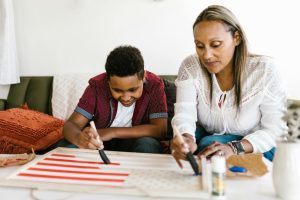
Constructive play involves using objects to create something, such as building blocks, puzzles, or crafts. This type of play develops fine motor skills, problem-solving abilities, and spatial awareness.
The Benefits of Learning Through Exploration and Discovery
The power of play lies in its ability to engage children in activities that promote exploration and discovery. Learning through play allows children to discover things at their own pace, in a way that is fun and meaningful to them. It also encourages a sense of independence and curiosity, as children are free to explore and find answers on their own.
Better Retention of Information
Children who learn through play are more likely to remember and retain information compared to those who are taught through traditional methods. Play allows for hands-on, experiential learning, which has been proven to be more effective in memory retention.
Enhanced Social Skills
Through play, children are constantly interacting with others, whether it is through cooperative play, imaginative play, or competitive play. This helps them develop social skills such as communication, teamwork, and conflict resolution.
Encourages Creativity and Critical Thinking
Play encourages children to use their imaginations and think outside the box, which is crucial for developing critical thinking skills. It also fosters creativity as children are constantly finding new ways to play and explore.
The Role of Parents and Educators
As parents and educators, it is important to recognize the power of play in a child’s learning and incorporate it into their daily routines. This could involve providing a variety of age-appropriate toys and materials, creating opportunities for play, and engaging in play with the child. Additionally, parents and educators can use play as a tool to teach specific skills and concepts, making learning more enjoyable for the child.
Conclusion
The power of play cannot be overstated when it comes to a child’s learning and development. Through play, children are able to learn, explore, and discover the world around them in a way that is fun and engaging. It is essential for parents and educators to embrace play and use it as a valuable tool in a child’s education. So the next time a child is immersed in play, remember that they are not just having fun, but they are also learning and growing in ways that will benefit them for years to come.